Extrusion vs. Die Casting: The CapEx Formula for LED Heat Sinks
In solid-state luminaire development, thermal management is rarely just a physical equation. It is fundamentally an economic calculation that dictates gross margins, minimum viable batch sizes, and tooling amortization schedules. High-power LED arrays routinely convert over sixty percent of supplied electrical energy directly into waste heat. When junction temperatures exceed safe operating limits, the consequences are immediate and irreversible, resulting in accelerated lumen depreciation, chromaticity shifts, and driver failure. When engineering a custom luminaire chassis, mechanical designers inevitably face a critical crossroads between aluminum profile extrusion and high-pressure die casting. Making the wrong choice either locks a brand into uncompetitive unit manufacturing costs or strands unamortized tooling capital on a factory floor.
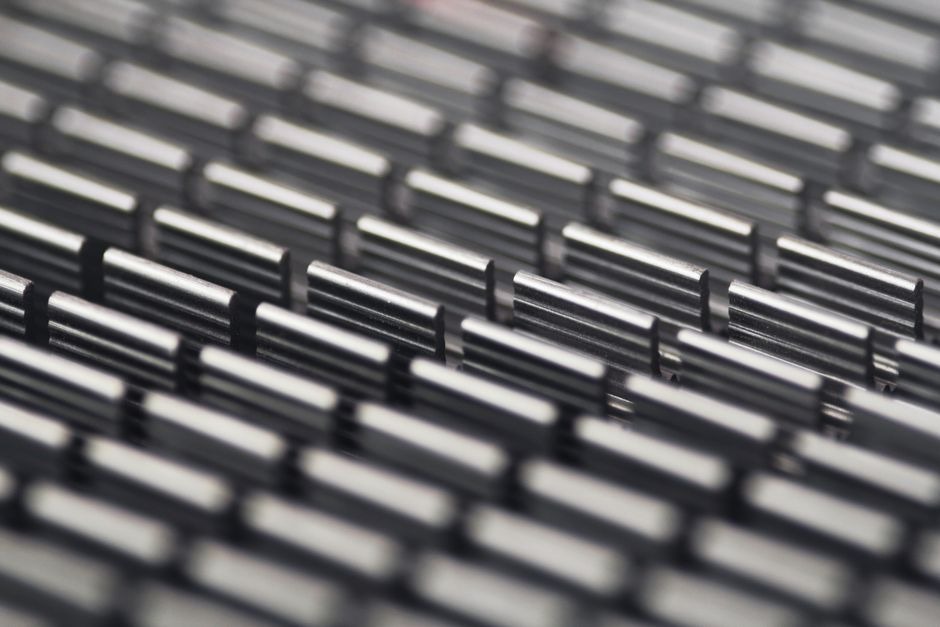
Thermal conductivity is dictated by metallurgy, and the chosen production method limits the allowable alloy. Standard linear extrusions use wrought alloys such as 6063-T5 aluminum, which delivers an impressive thermal conductivity of roughly two hundred watts per meter-kelvin. Its grain structure is uniform, dense, and virtually free of internal voids, allowing it to take Class One architectural anodizing with a pristine cosmetic surface directly on the exterior housing.
High-pressure die casting demands a very different chemical formulation. Molten metal must flow rapidly across intricate runners and gates into thin fin cavities before solidifying under intense pressure. This fluidity requires silicon-heavy casting alloys such as ADC12 or A380, which contain up to twelve percent silicon. That silicon content cuts thermal conductivity down to around ninety-six to one hundred watts per meter-kelvin, roughly half that of extruded aluminum. High-speed injection can also introduce microscopic gas porosity at the core of the part, introducing thermal resistance right where the LED board mounts. To match the thermal dissipation of an extruded profile, a die-cast housing must compensate with thirty to forty percent more surface area or significantly heavier wall sections.
While extrusion wins decisively on raw thermal performance, it remains fundamentally constrained to a two-dimensional profile stretched along a single axis. Any geometric detail that does not run parallel to the extrusion direction requires secondary multi-axis CNC milling. In hardware manufacturing hubs across Guangdong, a raw extruded profile may cost very little per kilogram off the press, but eight to ten minutes of CNC milling to hog out internal driver pockets, cut lateral wire channels, and drill mounting holes quickly inflates the piece-part price.
Die casting counters with remarkable geometric freedom and near-net-shape production. Structural mounting bosses, complex perimeter curves, wire routing passages, and continuous O-ring channels for ingress protection are formed in a single shot cycle lasting less than a minute. Post-processing for a casting is typically confined to automated trimming, vibratory tumbling, and thread tapping. For fixtures that demand organic styling, integrated thermal isolation chambers, or complex industrial designs, casting eliminates the machining bottlenecks that make extruded designs financially unviable at scale.
The deciding factor between these two approaches almost always comes down to tooling capital expenditure and production volume. An extrusion die cut from high-grade tool steel for a standard fixture envelope is relatively inexpensive, typically running between one and three thousand dollars, and can be sampled within two to three weeks. In contrast, a hardened steel die-casting mold featuring multi-slide action and complex cooling channels easily demands ten to twenty thousand dollars or more, accompanied by six to eight weeks of mold-flow optimization and tooling trials.
Determining the right process requires calculating the exact volume where the lower unit cost of a die-cast part offsets its steep upfront tooling investment. For an architectural downlight, the extruded blank might require extensive secondary milling that pushes its final part cost noticeably higher than the near-net-shape casting. By dividing the difference in upfront tooling costs by the per-unit savings generated on the factory floor, procurement teams can pinpoint their exact break-even threshold.
In commercial lighting hardware, that tipping point often sits around two thousand to twenty-five hundred units. Below that threshold, absorbing the higher per-piece machining cost of an extruded design preserves working capital and minimizes balance-sheet risk during early product rollout. Once lifetime volumes reliably exceed several thousand pieces, the lower unit cost and integrated features of die casting decisively overcome the initial mold investment, yielding substantial net margin gains over the life of the product line.
Tags: supply chain aluminum extrusion die casting led heat sinks thermal management tooling capex luminaire manufacturing adc12 alloy 6063 aluminum lighting hardware metal fabrication cnc machining chinamanufacturing product costing breakeven analysis